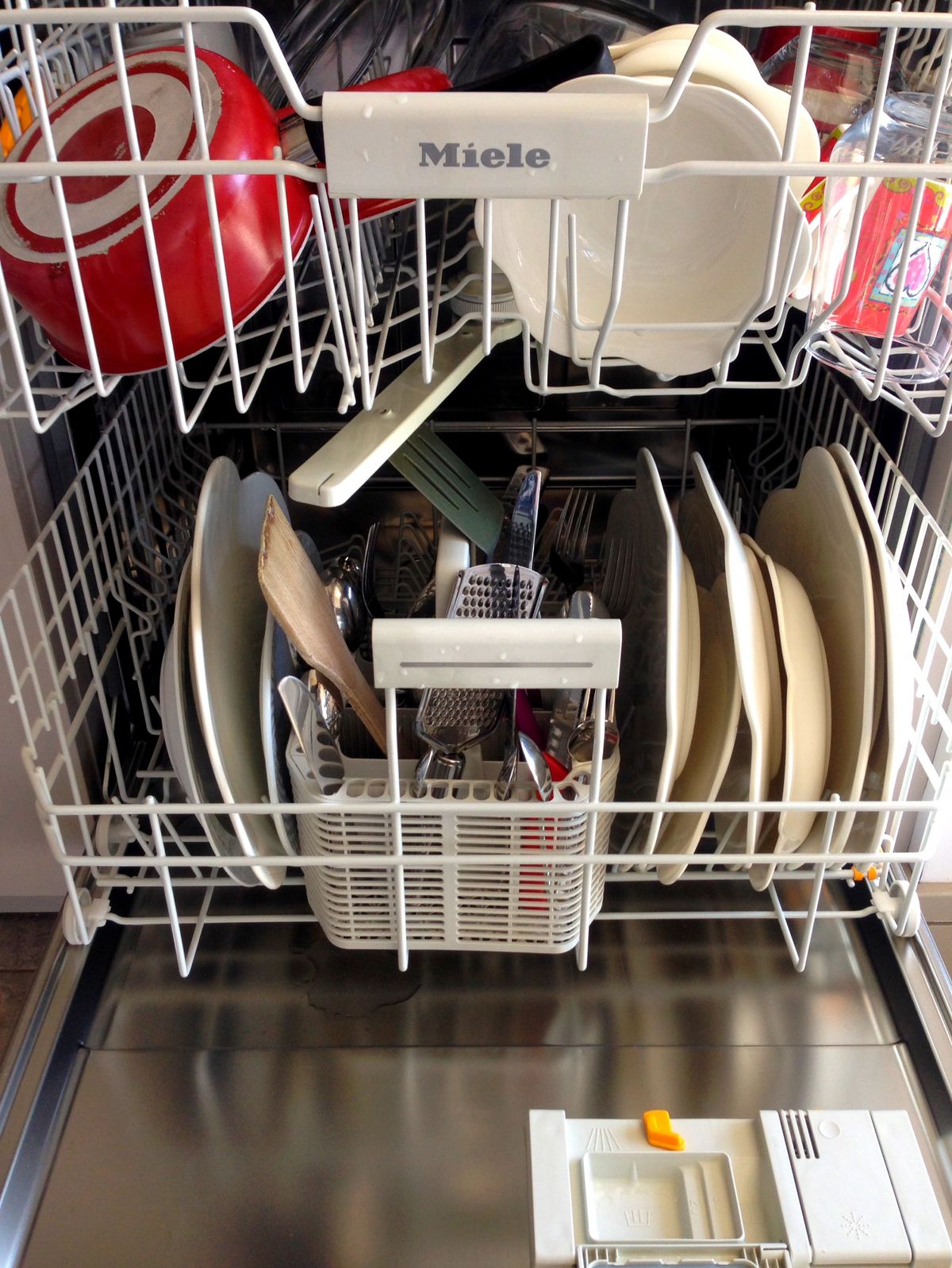
If the wash cycle finishes fine but you open the door to a load of wet, spotty, or still-damp dishes, the machine itself probably isn't broken in the way people assume. Drying problems are almost always narrower and cheaper to fix than homeowners expect — and they're one of the more common near me calls we get across Kennesaw.
You're out of rinse aid
This is, by far, the most common cause and the easiest to fix. Rinse aid breaks up water droplets so they slide off dishes instead of pooling. Without it, especially on plastics, water just sits there even after a perfectly good wash.
The heating element has failed
Many dishwashers use a heating element both to heat wash water and to assist drying. If it fails, dishes may still come out clean but noticeably cooler and wetter than normal.
The vent or fan isn't working
Newer, more energy-efficient models often rely on a vent or small fan to pull moist air out during the drying phase. If that component sticks or fails, condensation has nowhere to go.
Dishes are loaded too close together
Overcrowding blocks both water spray and airflow. Items nested together — bowls stacked instead of angled, for instance — trap water in ways that no drying cycle can fully overcome.
You're using the wrong cycle or eco mode
Energy-saving cycles intentionally run cooler and skip some heat-drying steps to save electricity, which often means noticeably wetter dishes as a trade-off. If drying has gotten worse recently, check whether eco mode got turned on by accident.
The two-minute check before anything else
Open the rinse aid compartment. If it's empty, refill it, run one more load, and see if the problem disappears entirely. This single step solves more "my dishwasher stopped drying" calls than any other fix on this list.
How to tell if it's the heating element
Touch the dishes right when the cycle ends. If they're cool rather than warm and the wash itself seemed shorter or less thorough than usual too, the heating element is a likely suspect — it affects both wash temperature and dry performance, not just one or the other. A technician can confirm it with a quick dishwasher repair diagnostic rather than you guessing at parts.
Still coming out wet after checking rinse aid and loading?
We diagnose heating elements, vents, and fan assemblies quickly, with same day repair available for most parts.
Call for Emergency ServiceLoading tips that actually improve drying
- Angle bowls and cups downward so water runs off instead of pooling inside them.
- Leave a small gap between large items like pots and casserole dishes.
- Avoid nesting silverware tightly in the basket — water gets trapped between pieces.
- Run the hottest cycle your dishes allow; heat does most of the drying work.
If you've tried all of this and dishes are still coming out wet every single time, that consistency is actually useful information — it tells a technician the issue is mechanical, not a loading habit, and narrows the diagnosis considerably before they even arrive. Routine dishwasher maintenance also catches a failing vent or heating element before it leaves every load wet.


